Highlights
- Coordinated planning can make long-distance moves easier to manage and keeps key moving tasks organized from start to finish.
- Professional movers can reduce physical work and logistical demands.
- Written estimates clarify costs, services, and responsibilities.
- Interstate movers should be checked for federal registration.
- Packing support can help protect belongings in transit.
- Early preparation can reduce last-minute relocation problems.
How Do Long Distance Movers Simplify a Relocation?
Long distance movers simplify relocation by bringing transportation, scheduling, loading, and delivery into one coordinated process. That matters because an interstate or multi-day move involves more than carrying boxes from one home to another.
Households may need to manage closing dates, lease deadlines, work schedules, travel arrangements, utility changes, and access to two properties. Working with long distance movers can reduce the moving tasks a household must personally manage while creating a clearer plan for pickup and delivery. Professional crews also bring equipment and established loading practices that can make moving heavy furniture, fragile belongings, and large quantities of boxes more manageable. Instead of solving each logistical problem separately, customers can focus on the broader transition while the moving team handles transportation-related details.
Why Does Planning Matter Before Moving Day?
Planning matters because long-distance relocations leave less room for last-minute adjustments than short local moves. The farther belongings must travel, the more important it becomes to confirm dates, access requirements, inventory details, packing needs, and delivery expectations in advance. A detailed inventory helps the mover understand shipment size, while accurate information about stairs, elevators, parking restrictions, or oversized items can prevent surprises. The Federal Motor Carrier Safety Administration’s guidance on written estimates explains that interstate movers must provide written estimates of charges and that estimates should be based on an actual or virtual inspection of household goods. Reviewing those details before loading begins helps customers understand included services and gives both sides a shared reference point throughout the move.
What Should Households Confirm Before Hiring a Mover?
- Households should confirm a mover’s registration, written estimate, service terms, and communication process before committing to an interstate move.
- Verify that an interstate mover is registered with the U.S. Department of Transportation.
- Request a written estimate after the mover has enough information to evaluate the shipment accurately.
- Confirm whether packing, storage, furniture disassembly, or specialty handling carries additional charges.
- Ask how pickup and delivery windows work, especially when exact arrival dates cannot be guaranteed.
- Review valuation options and understand how claims are handled if belongings are lost or damaged.
- Keep copies of estimates, inventories, contracts, receipts, and correspondence in an accessible folder.
- The Federal Trade Commission’s moving guidance recommends checking registration, obtaining written estimates, and avoiding movers that demand large deposits or ask customers to sign documents with blank spaces.
How Can Packing Services Reduce Moving Stress?
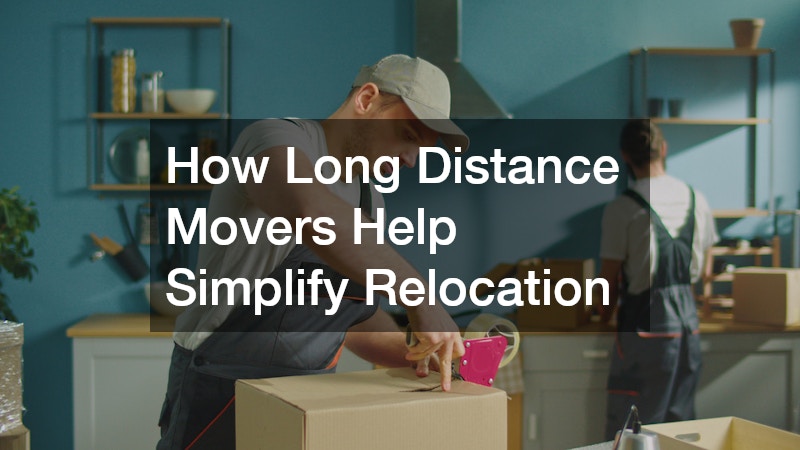
Packing services can reduce moving stress by shifting one of the most time-consuming parts of relocation to a crew that routinely prepares household goods for transportation. Long-distance moves often require careful preparation because boxes and furniture may spend more time in transit or be exposed to movement over hundreds of miles. Movers can help organize materials, wrap furniture, protect fragile pieces, and label boxes so unloading is easier at the destination. Even households that pack most belongings themselves may benefit from professional help with artwork, mirrors, electronics, oversized items, or rooms that are difficult to finish on schedule. Organized packing also makes it easier to decide what should travel with the household personally, what can go on the moving truck, and what should be donated, discarded, or stored. This added support can also keep the moving timeline more predictable from start to finish.
How Can Movers Make Transportation More Manageable?
- Movers make transportation more manageable by handling physical and logistical demands that become more complicated over long distances.
- Crews can load belongings strategically to use truck space efficiently and reduce shifting during transit.
- Moving equipment can make it safer to handle appliances, heavy furniture, and bulky household items.
- Coordinated pickup helps households avoid managing rental trucks, multiple vehicles, and loading helpers simultaneously.
- Established delivery procedures create a clearer process for unloading, checking inventory, and placing items in the new home.
- Communication during transit helps customers understand timing changes or access issues that could affect delivery.
- Optional storage can create flexibility when move-out and move-in dates do not align.
- For households juggling work, family, pets, or travel, these services can turn a complicated transportation project into a more structured sequence of tasks.
What Other Tasks Should Be Handled During a Long-Distance Move?
Other relocation tasks should be handled early so the household is ready to function as soon as it arrives. Movers can transport belongings, but customers still need to manage address changes, utilities, medications, school records, identification documents, insurance, and essentials needed during travel. The U.S. Postal Service’s change-of-address guidance recommends planning for mail forwarding and notes that households should still update their address directly with government agencies, banks, insurers, and other organizations. Important records, valuables, chargers, basic clothing, toiletries, and items needed immediately should remain accessible rather than being packed deep inside the shipment. Creating a first-night box can also make arrival easier. Handling these administrative and personal tasks alongside the moving plan can prevent the transition from becoming a scramble after the truck leaves.
What Makes a Long-Distance Move Easier to Manage?
A long-distance move becomes easier to manage when planning starts early, responsibilities are clearly divided, and important details are documented before moving day. Professional moving support can reduce heavy lifting, organize transportation, improve packing efficiency, and provide a clearer structure for pickup and delivery. Customers can protect their interests by verifying registration, reviewing estimates, understanding service terms, and keeping essential records accessible. Strong relocation plans also account for what happens beyond the truck, including mail forwarding, utilities, travel, first-night necessities, and arrival logistics. Moving to another city or state will always involve many decisions, but it does not have to feel disorganized. With careful preparation and the right moving support, households can spend less energy managing preventable complications and more energy settling confidently into their next home.